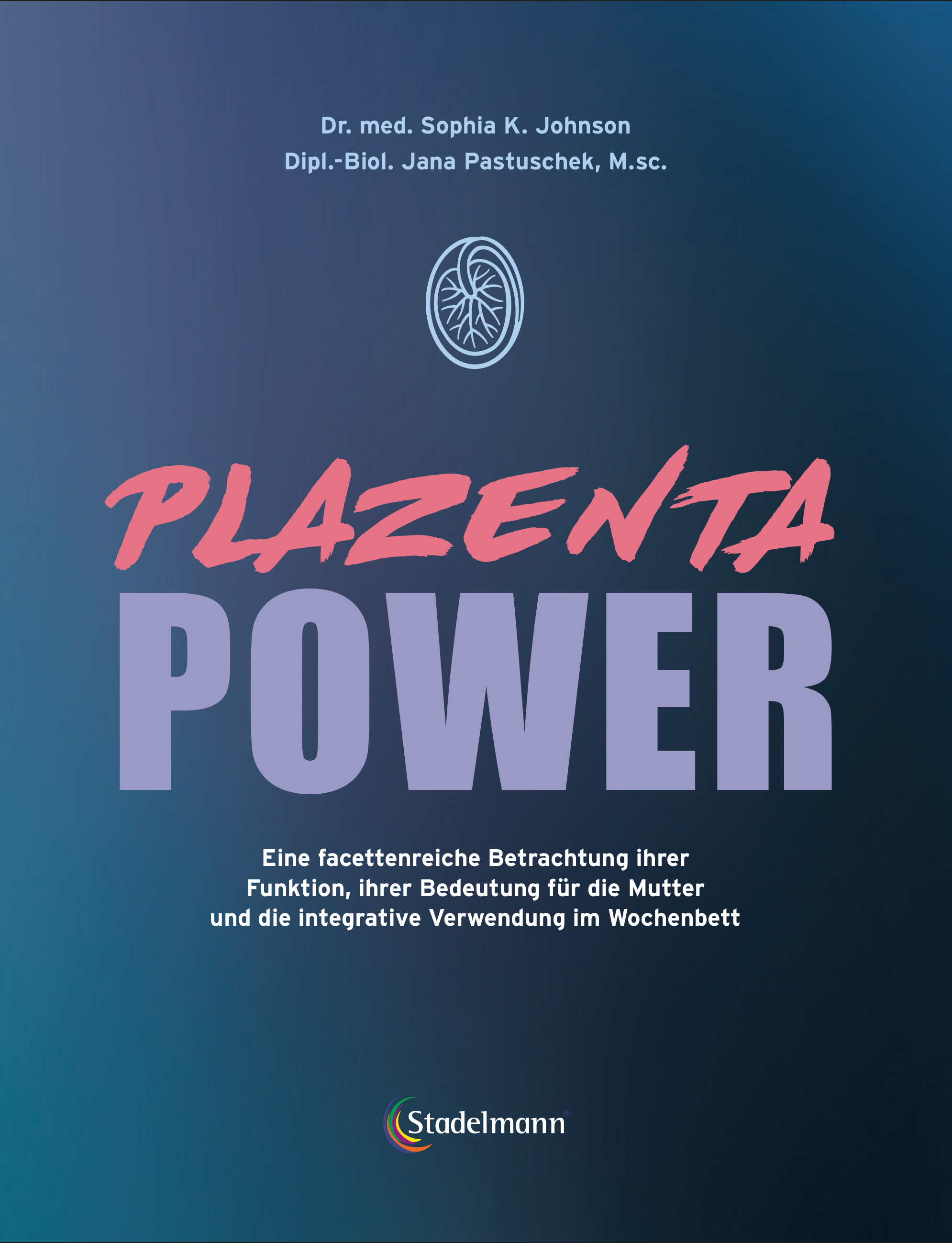


Placenta Power
Everything about the miracle organ: function during pregnancy, importance for the mother and integrative use as a remedy
The placenta is a true “all-rounder”: it does amazing things for the child and mother during pregnancy. After birth it is used in many ways, including as a postnatal remedy.
- But how exactly does the placenta work?
- How does she care for and protect the child in the womb?
- And can it help with maternal mood swings or milk production problems after birth?
In this book, the authors present the latest research results. They introduce the placenta universe in an entertaining and understandable way and name medical, historical and curious facts. They address the topic of placentophagy (placenta consumption) in detail and provide practical tips and recipe suggestions from placenta capsules to smoothies. From a medical-scientific perspective, this presentation is supplemented by reports from women who have used their placenta as a medicine.
Sample (910 KB)
Table of contents
0 83 70 - 17 77 oder per E-Mail ab Verlag:
bestellung@stadelmann-verlag.de


Available also on all standard ebook plattforms e.g.
Amazon.de
Amazon.com
Apple books
Barnes and Noble
Kobo
Storytel
The book
Information for making your own, informed decision
When women consider whether they want to use their own placenta during the postpartum period, they do not always receive technically correct information.In this book Sophia Johnson and Jana Pastuschek provide easy-to-understand information about the placenta and its potential as a postpartum remedy by collecting and discussing information. They supplement these with the results of their own research so that every woman can make her own, informed decision.
The authors thus draw attention to women in the postpartum period,
but also on the female perspective in science and empirical medicine, which has long recognized the benefits of the placenta. Even if it is sometimes a social taboo to process one's own placenta, every woman is allowed to decide about her placenta!The authors
Dr. med. Sophia Johnson
Sophia Johnson studied human medicine at the University of Witten/Herdecke with study visits and internships in Tanzania, Russia, USA, Scotland, Austria and Italy. During her studies, she expanded her training and took part in the university curriculum for Chinese medicine and anthroposophic medicine. This was followed at short intervals by the birth of three children. She used the time in between for scientific work and a doctorate at the Placenta Laboratory at Jena University Hospital, training in classical homeopathy and various clinical rotations for specialist training.Sophia Johnson lives with her family in Weimar and works there, specialising in integrative general medicine.
Jana Pastuschek
Jana Pastuschek studied biology with a focus on microbiology, botany, genetics and anthropology at the Friedrich Schiller University in Jena, supplemented by a study visit of several months on the prehistory and early history of humans in Siena, Italy. She later expanded her knowledge with a Master of Science in “Molecular Medicine” at the Friedrich Schiller University in Jena. After several years of scientific work at the Max Planck Institute for Chemical Ecology and the Institute for Forensic Medicine, both based in Jena, she has now been conducting research in the placenta laboratory of the Clinic for Obstetric Medicine at the University Hospital Jena for over twelve years.Instagram: www.instagram.com/placenta.universe
The Instagram account https://www.instagram.com/placenta.universe/ is maintained by the authors of the book, Dr. Sophia Johnson and Jana Pastuschek.
Videos
Video about the research project on placenta-remedies during the post partum perios.
For the English translation, please turn on the English subtitle.
Placenta photography
A new look at the placenta
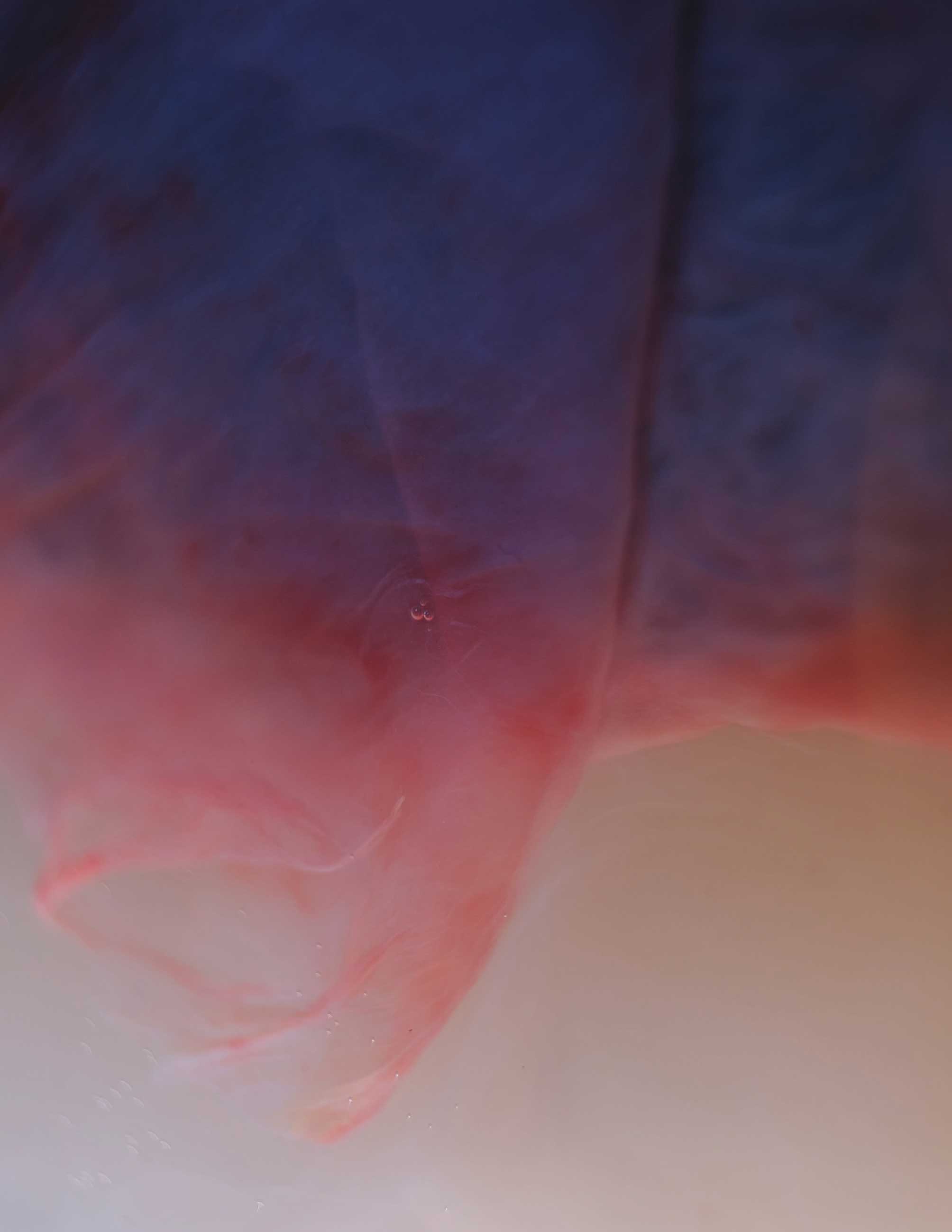
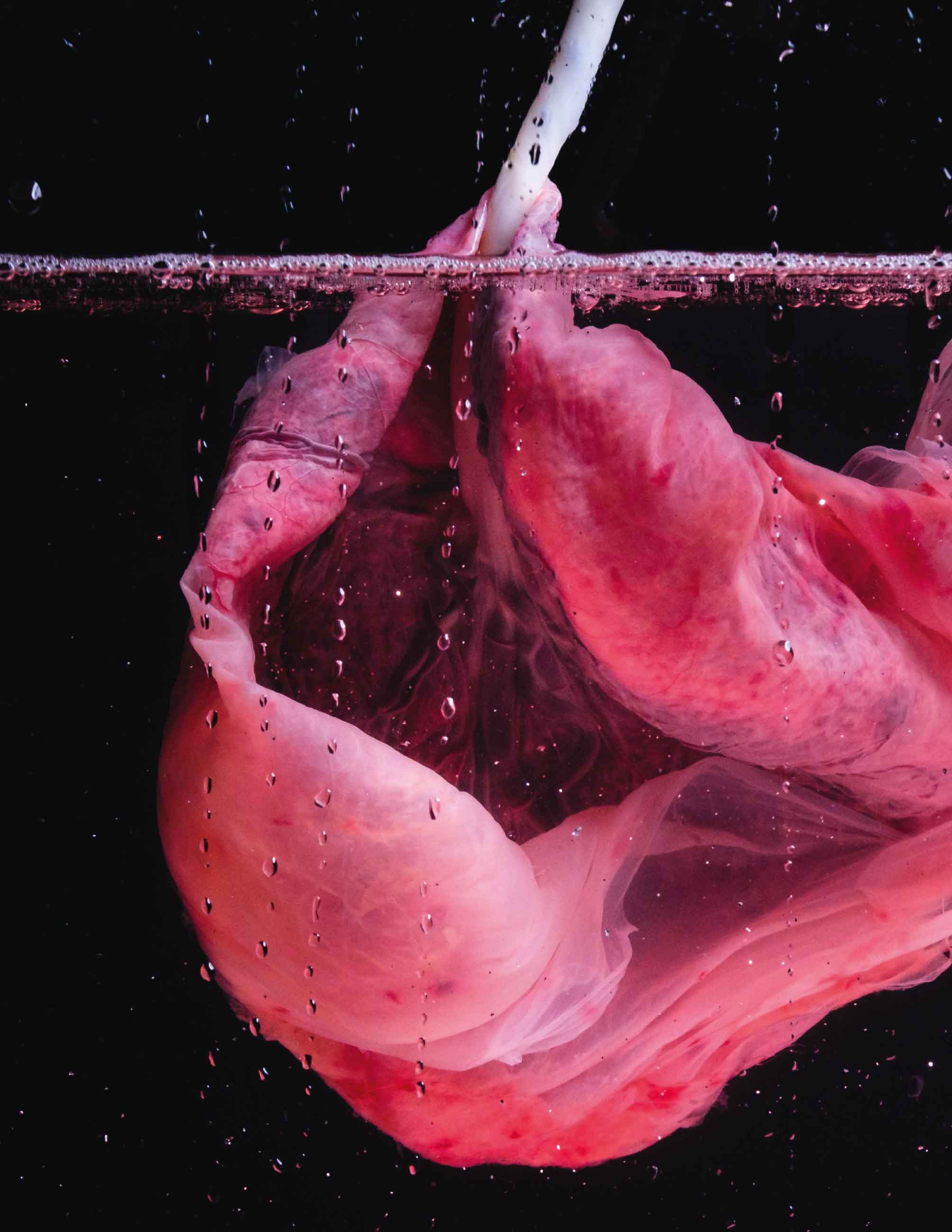
The photographs inside the book by Trevor Johnson and Manuel Nagel take a new and aesthetic look at the placenta. They approach it visually, sometimes in soft, deep tones, sometimes in pastel nuances, like a tentative introduction. They arouse curiosity to look closer and longer at this unknown organ. Some sections look like landscapes, others like delicate fabrics that float in front of the eye in flowing movement or are reminiscent of dance scenes. In the end, we are left with a reverent impression and the question of why we didn't take a closer look at this miraculous organ much earlier.You may order prints of the photos
»The photos of the placenta in the book approaches the placenta with an aesthetic approach
and takes a look at an organ that we have never dared to look at before. The images develop, like a careful introduction. We see vague excerpts in soft, dark colors, some of which are reminiscent of landscapes. Bit by bit we discover more details in the motifs and get an increasingly precise picture. Until we end up with the complete representation of the placenta, which floats delicately and gracefully in front of the eye, as if we were looking at a dance scene. The pictures radiate intimacy and peace and so you dare to look for a moment longer and quickly notice that you are very curious to take a closer look at this unknown structure. In the end, we are not only left with a reverent impression, because we have encountered the origin of life, but also with the big question of why we didn't take a closer look at it much earlier.«Nis Namdar

Scientific publications by the authors on the topic
To the publication
Über den Tellerrand geblickt: Plazenta als Heilmittel
To the publication (101 KB)
Wunderorgan auf Zeit
To the publication (394 KB)
Page 12f
Survey on the use of placenta
Survey in english
Press
Cornelia Enning, September 2023, author of "Heilmittel aus Plazenta" (Remedies of the placenta)
Komplette Rezension lesen (828 KB)
Johanna Heller in Hebammenforum 12/23
Frequently asked questions (FAQs)
1. What is this book about?
The book explores the placenta as a fascinating wonder organ of pregnancy, covering its essential functions during pregnancy as well as its potential use as a postpartum healing aid.
2. Who is this book for?
It is aimed at expecting mothers, postpartum women, midwives, and anyone interested in learning about the placenta and its significance, including its possible applications after birth.
3. What makes this book special?
The authors combine scientific research from the Placenta Laboratory at Jena University Hospital with accessible explanations, medical facts, and practical guidance. This allows readers to make informed decisions about using their own placenta.
4. What topics are covered?
The book includes:
- The function of the placenta during pregnancy
- Its importance for mother and child
- Background and use as a postnatal health booster
- Research on hormones, trace elements, and microbiota
- The phenomenon of placentophagy and practical guidance – from capsules to smoothies.
5. How is the book written and structured?
It is clear, engaging, and scientifically sound, combining text with tables, case studies, and background information to provide multiple perspectives on the placenta and its applications.
6. How can this book help me in everyday life?
It provides well-structured information so you can understand the potential benefits, risks, and traditions surrounding the placenta in the postpartum period – helping you make empowered, informed choices.
7. Does the book include practical examples or experiences?
Yes. In addition to scientific content, it features personal stories from women who have used their own placenta, as well as practical recipes and application ideas.
8. Who are the authors?
Dr. Sophia Johnson is a medical doctor with an integrative focus and experience in placenta research. Jana Pastuschek is a biologist specializing in molecular medicine who has studied the placenta extensively.